The Great Migration Safari in Tanzania
A migration safari in Tanzania is one of the most breathtaking wildlife experiences on Earth. Known as the Great Migration, this natural spectacle unfolds across the vast plains of the Serengeti National Park and extends into the Maasai Mara National Reserve. It is often described as the greatest wildlife show on the planet—raw, powerful, and completely unforgettable.
What is the Great Migration?
The Great Migration is a year-round journey of over 1.5 million wildebeest, accompanied by hundreds of thousands of zebras and gazelles, moving in a continuous cycle in search of fresh grass and water. This movement is driven by rainfall patterns, creating a dramatic and ever-changing safari experience.
Unlike a single event, the migration is a living, moving ecosystem, where every moment is shaped by survival—birth, movement, and predator-prey interaction.
The Journey Through the Serengeti
The migration begins in the southern plains of the Serengeti National Park, near the Ngorongoro Conservation Area, where the fertile grasslands provide ideal conditions for calving season.
Calving Season (January – March)
This is one of the most emotional and dramatic periods of the migration. Around 500,000 calves are born within a few weeks. The plains come alive with newborns taking their first steps, while predators like lions, cheetahs, and hyenas closely follow the herds.
This period offers:
- Incredible wildlife photography opportunities
- High predator activity
- Beautiful green landscapes
The Great Movement North (April – June)
As the rains end, the herds begin their journey northwest through the central Serengeti. Long columns of wildebeest stretch across the horizon, creating one of the most iconic safari scenes.
During this phase:
- Animals gather in massive numbers
- The landscape begins to dry
- Tension builds as the herds prepare for the next big challenge
The Famous River Crossings (July – October)
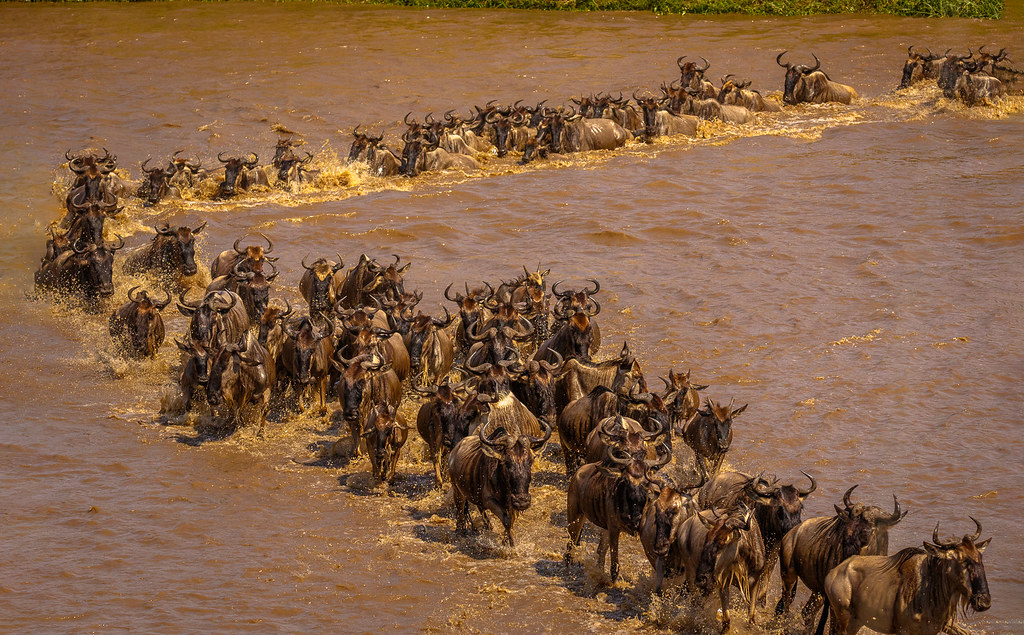
This is the most dramatic and sought-after stage of the migration. The herds reach the Grumeti and Mara Rivers, where they must cross crocodile-infested waters to continue their journey.
At the Mara River, chaos unfolds:
- Thousands of wildebeest plunge into the river
- Strong currents and steep banks create danger
- Nile crocodiles lie in wait
These crossings are unpredictable and intense, making them a highlight for travelers seeking action and raw nature.
Into the Maasai Mara (August – October)
After crossing into the Maasai Mara National Reserve, the herds spread across the rich grasslands, feeding and regaining strength. This area offers incredible game viewing, including the Big Five—lion, leopard, elephant, buffalo, and rhino.
The Return South (November – December)
With the arrival of short rains, the herds begin their journey back to Tanzania, heading once again toward the southern Serengeti. The cycle continues, making the migration a year-round safari experience.
Why Choose a Migration Safari?
A migration safari is not just about seeing animals—it’s about witnessing nature in motion. Every day is different, and every sighting tells a story of survival.
You can expect:
- Massive herds stretching as far as the eye can see
- Dramatic predator-prey encounters
- Stunning African landscapes
- Unique cultural encounters with the Maasai people
Best Time to Visit
There is no single “best” time—each season offers something unique:
- January – March: Calving season (southern Serengeti)
- April – June: Herd movement (central Serengeti)
- July – October: River crossings (northern Serengeti)
- November – December: Return migration
A Once-in-a-Lifetime Experience
A migration safari in Tanzania is more than a trip—it’s a journey into the heart of the wild. Whether you’re watching a newborn calf take its first steps or witnessing a dramatic river crossing, every moment leaves a lasting impression.
For travelers seeking adventure, beauty, and authenticity, the Great Migration in the Serengeti National Park stands as one of the most extraordinary experiences in the natural world.
Leave a Reply